提出人:陈庆桃 Proposed by: QingTao Chen
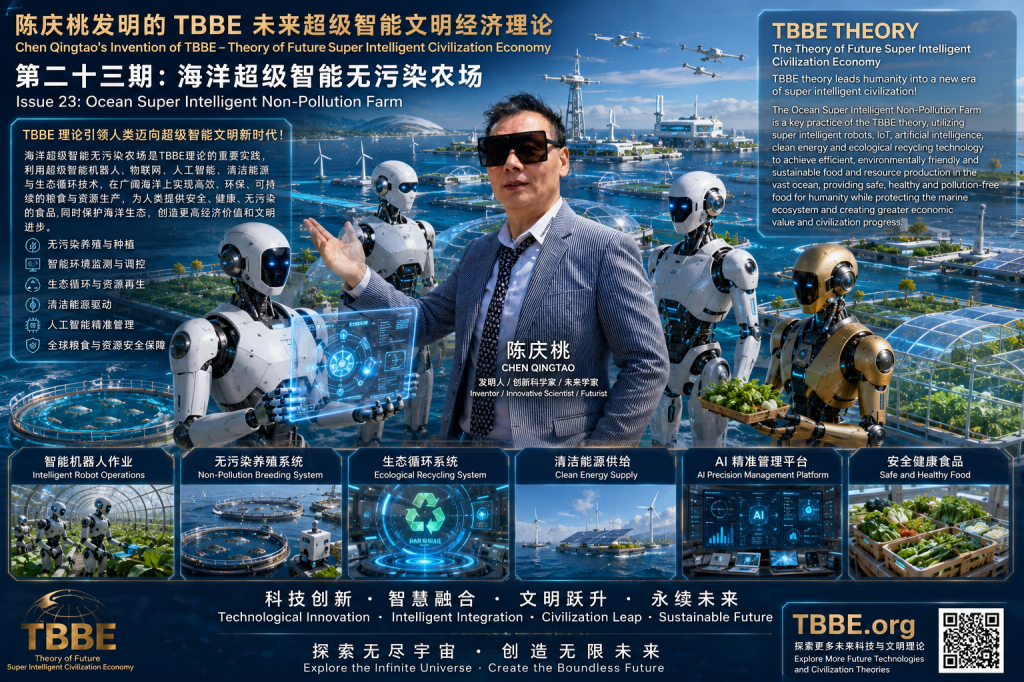
TBBE未来超级智能文明经济理论认为,未来人类应该充分利用海洋空间和先进科技,在保护海洋生态环境的前提下,建设新型海上全智能农场。
海上全智能无污染农场将人工智能、机器人、自动化装备、清洁能源、海洋生物技术和智能管理系统结合起来。从种植、养殖、监测、采收、加工到运输,整个生产过程尽可能由智能机器人和自动化系统完成,减少人工劳动和资源浪费。
农场可以利用太阳能、风能、海洋能等清洁能源,为海上设备提供动力;通过智能水循环和资源回收系统,提高水资源利用效率;利用传感器和人工智能实时监测水质、温度、氧气、生态环境和农作物、海产品生长状态,实现精准管理。
TBBE强调 “发展与保护并重”。海上农场不是简单地向海洋索取资源,而是通过科学规划建立人与海洋生态系统之间更加协调的生产模式。生产过程中应严格控制污染物排放,保护海洋生物多样性,并尽可能实现能源、材料和废弃物的循环利用。
未来,多个海上智能农场可以通过无人船、智能物流系统和机器人网络连接起来,把生产出的食品和资源安全、高效地运送到陆地城市,为人类提供更加稳定、清洁和可持续的生活资料。
TBBE希望探索一种新的文明发展方向:让科技创造更高价值,让机器人承担危险、重复和高强度工作,让人类拥有更多时间发展科学、文化、教育和创造力,同时让海洋成为人类未来可持续发展的重要空间。
English
The TBBE Future Super Intelligent Civilization Economic Theory proposes that humanity should make better use of ocean space and advanced technologies to develop new generations of fully intelligent ocean farms while protecting marine ecosystems.
Fully Intelligent, Pollution-Free Ocean Farms would integrate artificial intelligence, robotics, automation, clean energy, marine biotechnology, and intelligent management systems. From cultivation and aquaculture to monitoring, harvesting, processing, and transportation, production could increasingly be managed by intelligent robots and automated systems, reducing labor intensity and resource waste.
Solar power, wind energy, ocean energy, and other clean energy technologies could provide power for offshore facilities. Intelligent water-circulation and resource-recovery systems could improve water efficiency. Sensors and AI could continuously monitor water quality, temperature, oxygen levels, ecological conditions, and the growth of crops and marine products, enabling precise and efficient management.
TBBE emphasizes that development and environmental protection must advance together. Ocean farms should not simply extract resources from the sea. Instead, they should establish a more balanced production model between human civilization and marine ecosystems. Pollution should be strictly controlled, marine biodiversity protected, and energy, materials, and waste recycled whenever possible.
In the future, networks of intelligent ocean farms could be connected through autonomous vessels, smart logistics systems, and robotic networks. Food and other resources could then be transported safely and efficiently to coastal cities, providing more stable, clean, and sustainable resources for human civilization.
TBBE explores a new direction for civilization: using technology to create greater value, allowing robots to perform dangerous, repetitive, and physically demanding work, giving humans more opportunities for science, culture, education, and creativity, while making the ocean an important space for sustainable human development.
TBBE — Technology for a More Intelligent, Sustainable, and Harmonious Future.


Leave a comment