发明人:陈庆桃 Invented by: QingTao Chen
TBBE未来超级智能文明经济理论认为,海洋不仅是地球生态系统的重要组成部分,也是未来人类获得生活资料和发展资源的重要空间。
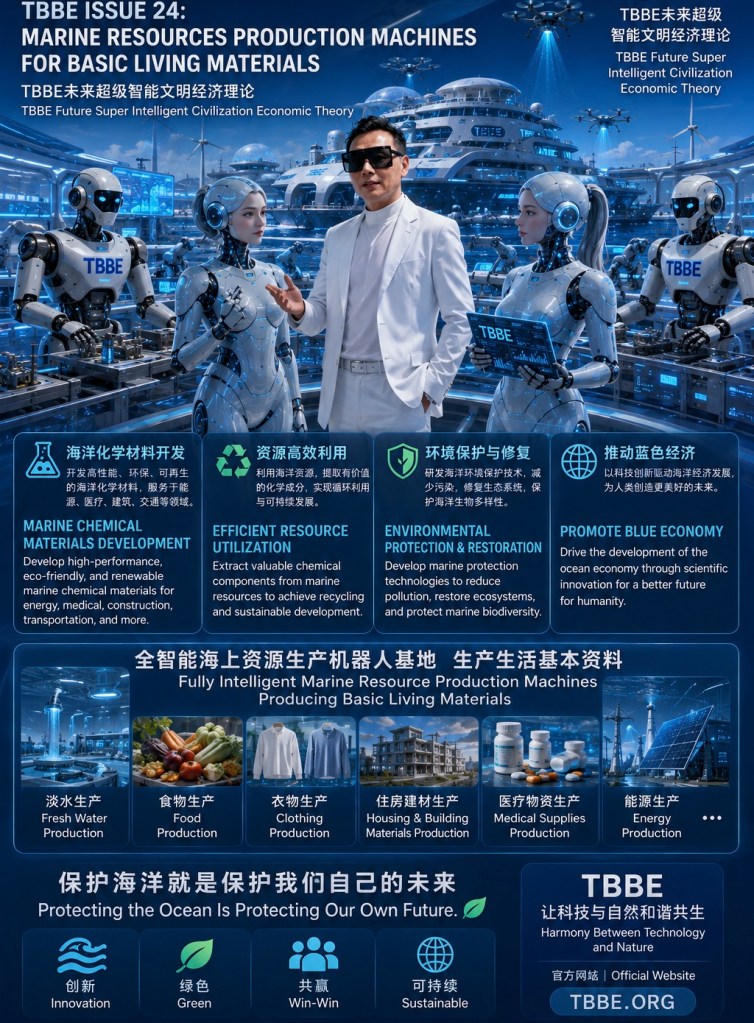
第二十四期海洋资源产出生活资料 提出:未来应依靠人工智能、机器人、清洁能源、先进材料技术和智能制造系统,在保护海洋生态环境的前提下,对海洋资源进行科学、合理、可持续的开发利用。
未来海洋智能生产系统可以从海水、海洋生物以及海底矿产等资源中,通过先进技术生产和转化为人类所需要的生活资料,例如淡水、食品、基础材料、能源以及部分工业和生活用品。
海水淡化系统可以为海上城市和沿海地区提供淡水;智能海洋农场可以生产水产品和其他食品;机器人可以参与海洋资源采集、运输、加工和制造,减少危险和高强度人工劳动;清洁能源则为整个系统提供持续动力。
TBBE强调,海洋资源开发必须以生态保护为前提。任何开发活动都应建立环境监测、污染控制、资源循环利用和生态修复机制,避免过度捕捞、海洋污染和无序开发。
未来可以建设连接海上城市、智能农场、无人船、海洋制造基地和陆地城市的超级智能网络,使海洋资源经过智能化生产和加工后,高效、安全地转化为人类生活资料。
TBBE第二十四期的核心理念是:
让海洋资源通过科技产生更高价值,让机器人完成更多生产工作,让人类获得更加丰富、安全、清洁和可持续的生活资料,同时保护海洋生态,为未来文明留下健康的蓝色家园。
The TBBE Future Super Intelligent Civilization Economic Theory proposes that the ocean is not only an essential part of Earth’s ecological system, but also an important future space for humanity to obtain living resources and develop sustainable production.
Issue 24: “Ocean Resources for Producing Essential Living Materials” proposes that, with artificial intelligence, robotics, clean energy, advanced materials technology, and intelligent manufacturing systems, humanity can scientifically and sustainably utilize ocean resources while protecting marine ecosystems.
Future intelligent ocean production systems could transform seawater, marine biological resources, and selected seabed mineral resources into useful materials for human life through advanced technologies. These may include fresh water, food, basic materials, energy, and certain industrial and household products.
Advanced desalination systems could provide fresh water for offshore cities and coastal communities. Intelligent ocean farms could produce seafood and other food resources. Robots could perform resource collection, transportation, processing, and manufacturing, reducing dangerous and physically demanding human labor. Clean energy could provide sustainable power for the entire system.
TBBE emphasizes that ocean resource development must always be based on ecological protection. Development activities should include environmental monitoring, pollution prevention, resource recycling, and ecological restoration in order to prevent overfishing, marine pollution, and uncontrolled exploitation.
In the future, super intelligent networks could connect offshore cities, intelligent farms, autonomous vessels, ocean manufacturing facilities, and land-based cities. Through intelligent production and processing, ocean resources could be transformed efficiently and safely into useful living materials for human civilization.
The core vision of TBBE Issue 24 is:
Use technology to create greater value from ocean resources, allow robots to perform more productive work, provide humanity with richer, safer, cleaner, and more sustainable living materials, and protect the ocean as a healthy blue home for future civilization.
TBBE — Building a Super Intelligent, Sustainable, and Harmonious Future Civilization.


Leave a comment