Core Principle
To drive technological innovation through super intelligence, promote economic development through scientific advancement, support civilization through sustainable prosperity, and ultimately improve the well-being of humanity.
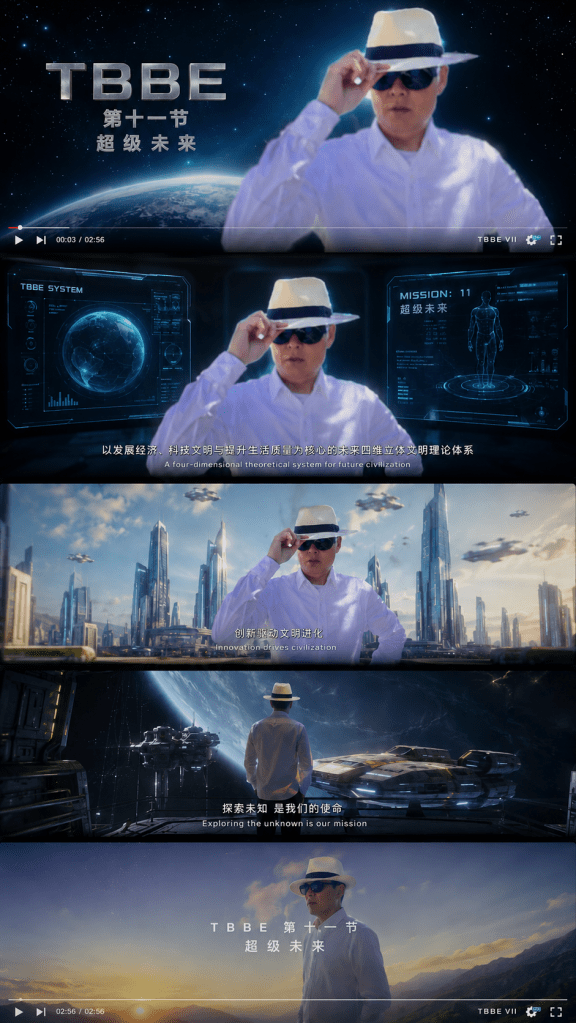
The TBBE Future Super-Intelligent Civilization, Science, Technology, and Economic Theory, initiated by Chen Qingtao, is a comprehensive interdisciplinary framework built upon economics, science, technology, systems engineering, artificial intelligence, and civilization studies. Unlike traditional foundational theories, the TBBE framework focuses on practical applications and real-world development needs, aiming to explore how advanced intelligence, innovative technologies, and modern economic systems can promote human progress and improve the quality of life.
The theory proposes that human civilization has evolved from agricultural civilization to industrial civilization and then to the information age. The next stage will be the era of Super-Intelligent Civilization, characterized by the deep integration of intelligent systems, scientific innovation, economic efficiency, and sustainable development.
Within the TBBE framework, future economic growth will rely not only on traditional factors such as capital, labor, and natural resources but increasingly on knowledge, innovation, intelligent systems, and data-driven decision-making. Data, algorithms, artificial intelligence, and creative talent will become the most valuable productive resources of future societies.
The theory introduces the concept of a Super-Intelligent Scientific and Technological Ecosystem, where artificial intelligence, quantum computing, advanced materials, biotechnology, robotics, aerospace engineering, and clean energy technologies work together in a highly coordinated manner. This integrated innovation platform could accelerate scientific discovery and transform technological achievements into productive economic value.
In industrial development, the TBBE theory advocates the establishment of a Future Intelligent Industrial System. Intelligent manufacturing, smart logistics, digital finance, intelligent healthcare, smart agriculture, smart cities, and space-related industries are expected to become key drivers of future economic growth. Through intelligent resource allocation and real-time optimization, production and consumption can be better matched, significantly improving efficiency and sustainability.
A major component of the theory is the development of Future Super-Intelligent Cities. These cities will serve as centers of innovation, economic activity, education, and cultural advancement. By utilizing artificial intelligence, big data, the Internet of Things, and automated management systems, cities can optimize transportation, energy usage, environmental protection, public safety, and public services, creating a more efficient and livable urban environment.
The TBBE framework also emphasizes the transformation of education. Future educational systems will support lifelong learning through intelligent platforms, personalized instruction, and global knowledge sharing. Every individual will have opportunities to develop their talents and contribute to society according to their unique abilities and interests.
Environmental sustainability is another core pillar of the theory. Economic growth and ecological protection should advance together. Intelligent monitoring systems, renewable energy technologies, and optimized resource management can help establish a harmonious relationship between humanity and nature while supporting long-term sustainable development.
The theory further promotes international cooperation and global coordination. As technology continues to connect the world, nations can share knowledge, scientific achievements, educational resources, and innovative solutions through intelligent collaborative platforms, accelerating the progress of global civilization.
One of the most distinctive features of the TBBE theory is its strong emphasis on practicality and applicability. Rather than remaining a purely academic concept, it seeks to provide a strategic framework for future development, helping governments, universities, research institutions, enterprises, and policymakers address emerging challenges and opportunities.
Looking ahead, the TBBE Future Super-Intelligent Civilization, Science, Technology, and Economic Theory will continue to explore the integrated development of four key dimensions: Super Intelligence, Super Technology, Super Economy, and Super Civilization. Together, these dimensions form a comprehensive vision for a more innovative, prosperous, sustainable, and advanced future for humanity.


Leave a Reply