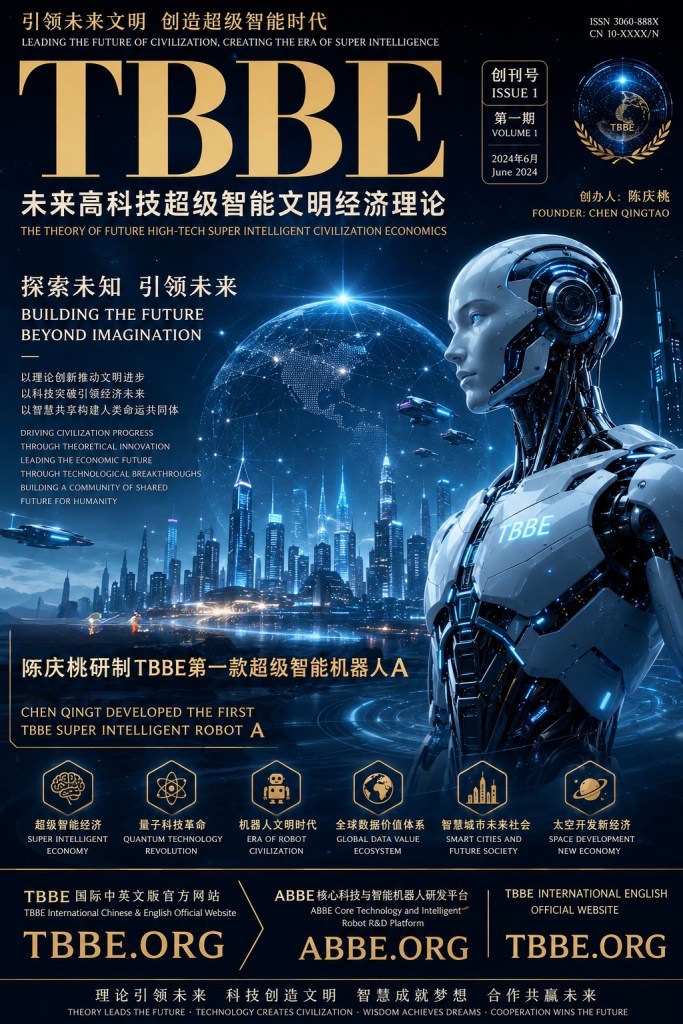
• 作者:陈庆桃(TBBE理论发明人)Invented by Qingtao Chen

    在人类文明发展的历史长河中,农业文明、工业文明、信息文明相继推动了社会进步与经济繁荣。今天,人类正站在一个全新的历史转折点——超级智能文明时代的入口。

    《TBBE未来高科技超级智能文明经济理论》正是在这一时代背景下提出的一项前沿理论研究。TBBE(Total Brain-Based Economy)旨在探索未来超级人工智能、机器人系统、量子科技、智慧能源、全球数据网络以及太空资源开发背景下的新型经济文明体系。

    本理论认为,未来经济发展的核心将逐步由传统的人力资本、资源资本和金融资本,向超级智能系统资本转变。超级智能文明将重构生产、消费、教育、医疗、能源、交通、金融以及社会治理体系,并推动人类文明进入一个更加高效、更加智慧、更加协同的新阶段。

    TBBE理论不仅关注经济增长,更关注文明升级。未来社会的发展目标,不应仅仅是财富积累,而是实现科技创新、文明进步、全球合作与人类共同繁荣。

    本刊的创办,旨在搭建一个国际化、开放性、跨学科的学术交流平台,推动未来经济理论、人工智能文明、智能机器人产业以及全球创新体系的发展与研究。

    我们欢迎来自世界各国的专家学者、科技工作者、企业家以及青年研究人员共同参与TBBE理论的研究与实践,为建设未来超级智能文明贡献智慧与力量。

    Throughout human history, agricultural civilization, industrial civilization, and information civilization have successively driven social progress and economic prosperity. Today, humanity stands at the threshold of a new era—the Age of Super Intelligent Civilization.

    The Theory of TBBE (Total Brain-Based Economy) has been proposed as a forward-looking framework for understanding and guiding this historic transformation. TBBE explores the future economic civilization emerging from the convergence of artificial superintelligence, intelligent robotics, quantum technologies, advanced energy systems, global data networks, and space resource development.

    According to the TBBE framework, the primary driver of economic value creation will gradually shift from traditional labor, resource, and financial capital toward intelligent system capital. Super intelligent civilization will reshape production, education, healthcare, transportation, energy, finance, and governance, creating a more efficient, interconnected, and intelligent world.

    TBBE is not merely an economic theory. It is a vision for the next stage of human civilization. The ultimate goal of future development should extend beyond wealth creation toward technological advancement, civilizational progress, global cooperation, and shared prosperity for humanity.

    The establishment of this journal aims to provide an international, open, and interdisciplinary platform for academic exchange and innovation. It seeks to promote research on future economics, artificial intelligence civilization, intelligent robotics, advanced technology systems, and global collaborative development.

    We warmly invite scholars, scientists, entrepreneurs, engineers, and young researchers from around the world to participate in the exploration and development of TBBE, contributing collectively to the future of super intelligent civilization.

    TBBE核心愿景
    Core Vision of TBBE

    1. 超级智能系统经济
       Super Intelligent System Economy

    2. 全球智慧能源网络
       Global Intelligent Energy Network

    3. 超级机器人文明体系
       Super Robotic Civilization System

    4. 全球数据价值体系
       Global Data Value Ecosystem

    5. 智能金融与数字资本
       Intelligent Finance and Digital Capital

    6. 智慧城市与未来社会
       Smart Cities and Future Society

    7. 太空资源开发经济
       Space Resource Development Economy

    8. 人类命运共同文明
       Shared Civilization for Humanity

    刊物宗旨
    Journal Mission

    以理论引领未来 
    以科技创造文明 
    以智慧促进发展 
    以合作推动繁荣

    Leading the Future with Theory 
    Creating Civilization through Technology 
    Advancing Development through Wisdom 
    Promoting Prosperity through Cooperation
  • Screenshot

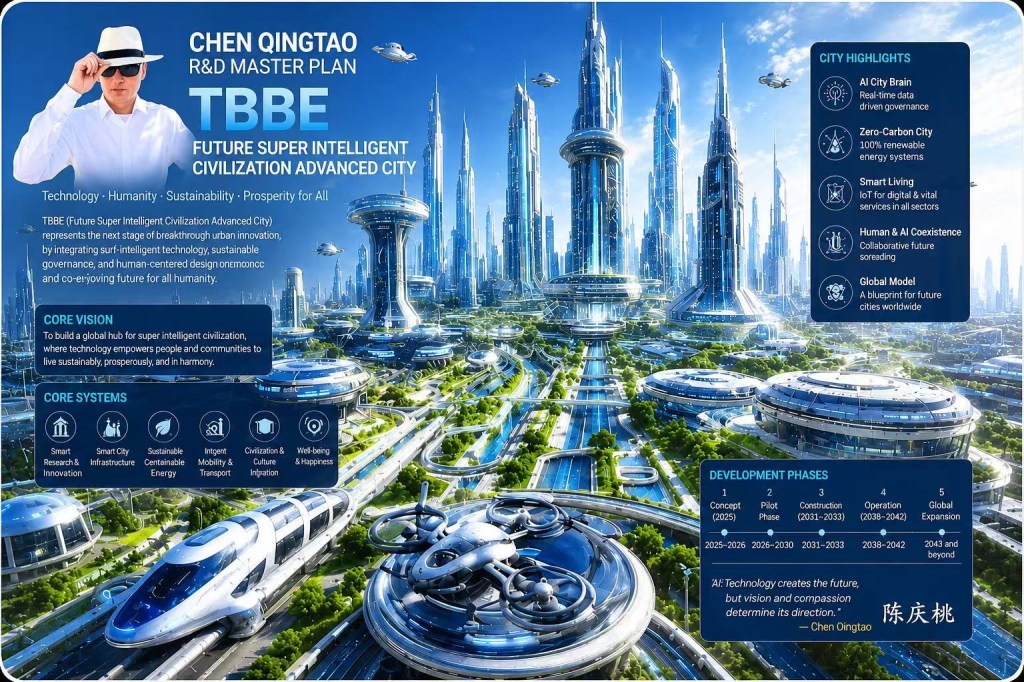
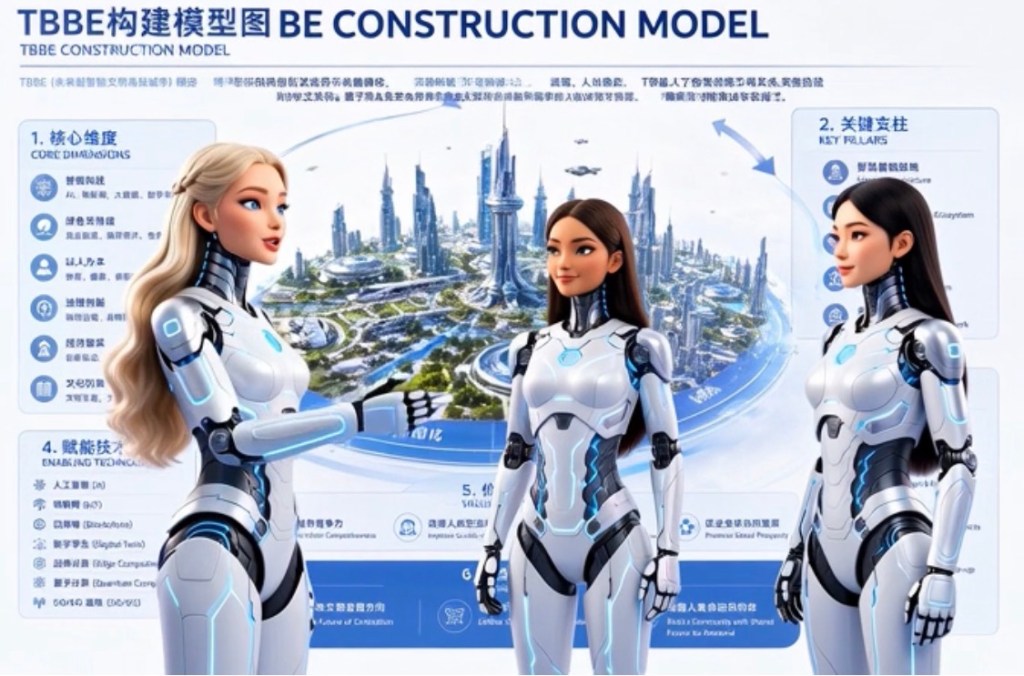
    The TBBE Super Intelligent City Construction Model is a future-oriented urban development framework based on the principles of the TBBE Future Super Intelligent Civilization Economic Theory. Its purpose is to create a highly efficient, intelligent, sustainable, and human-centered civilization through the integration of advanced technologies, intelligent systems, ecological sustainability, and innovative economic structures.

    Unlike traditional cities, where infrastructure and management systems often operate independently, the TBBE model proposes a fully integrated urban ecosystem. Artificial intelligence, robotics, the Internet of Things (IoT), digital twins, renewable energy, and intelligent transportation networks work together as a unified system to optimize city operations and improve the quality of life for all residents.

    1. Overall Architecture of the TBBE Super Intelligent City

    The city is built upon eight core intelligent systems:

    1. Super Intelligent Economic System
    2. Super Intelligent Energy System
    3. Super Intelligent Transportation System
    4. Super Intelligent Education System
    5. Super Intelligent Healthcare System
    6. Super Intelligent Ecological and Environmental System
    7. Super Intelligent Cultural and Community System
    8. Super Intelligent Governance and Management System

    These systems are connected through a central AI platform known as the “City Brain,” enabling real-time coordination, analysis, prediction, and decision-making.

    2. Super Intelligent Economic System

    The future economy will be driven by innovation, automation, and intelligent resource allocation. Advanced AI systems continuously analyze market demand, production capacity, technological development, and social needs.

    Research institutions, intelligent manufacturing centers, technology enterprises, and robotics industries form the foundation of economic growth, creating a highly productive and sustainable economic environment.

    3. Super Intelligent Transportation Network

    The TBBE model proposes a three-dimensional transportation structure consisting of underground, ground-level, and aerial transportation systems.

    Autonomous vehicles, intelligent rail systems, logistics robots, drone delivery networks, and AI traffic management platforms operate together to maximize efficiency, reduce congestion, and minimize environmental impact.

    4. Super Intelligent Energy System

    Future cities will rely primarily on renewable and clean energy sources, including solar power, wind energy, advanced energy storage systems, and next-generation sustainable technologies.

    An intelligent energy network automatically balances supply and demand, maximizing efficiency while reducing waste and carbon emissions.

    5. Super Intelligent Ecological Environment System

    Environmental sustainability is a fundamental principle of the TBBE model.

    Vertical forests, smart green buildings, urban ecological parks, intelligent water management systems, and advanced recycling technologies help create a clean, healthy, and low-carbon living environment.

    6. Super Intelligent Robotics Service System

    Robots will become important partners in future urban life.

    Service robots, healthcare robots, educational robots, engineering robots, security robots, and household robots will perform repetitive, dangerous, and labor-intensive tasks, allowing people to focus on creativity, learning, innovation, and social development.

    7. Super Intelligent Community Life System

    Every community is designed to provide comprehensive intelligent services.

    Residents will benefit from advanced healthcare facilities, intelligent education platforms, personalized public services, smart housing systems, and innovative recreational environments.

    Children, adults, and senior citizens will all enjoy equal access to high-quality public resources and opportunities.

    8. The TBBE City Brain

    The City Brain serves as the central intelligence of the entire urban system.

    Millions of sensors, IoT devices, and AI platforms continuously collect and analyze data from every aspect of city operations. Through predictive analytics and autonomous decision-making, the City Brain enhances efficiency, safety, sustainability, and public service quality.

    9. Strategic Objectives of the TBBE Super Intelligent City

    The primary goals include:

    – Building a zero-pollution green city.
    – Creating a highly efficient intelligent economy.
    – Improving human well-being and quality of life.
    – Establishing fair and accessible public services.
    – Promoting harmony between humanity and nature.
    – Supporting sustainable long-term development.
    – Advancing global civilization through technology and innovation.

    Conclusion

    The TBBE Super Intelligent City Construction Model, invented, researched, and designed by Chen Qingtao, represents a visionary framework for future urban civilization. By integrating advanced technologies, intelligent governance, sustainable development, and human-centered design, the model seeks to create a new generation of cities that are cleaner, smarter, safer, and more prosperous.

    As a key component of the TBBE Future Super Intelligent Civilization Economic Theory, this model provides a long-term conceptual roadmap for governments, universities, research institutions, enterprises, and future generations seeking to build a more advanced and harmonious civilization.

  • Screenshot

    According to the TBBE Future Super Civilization Economic Theory, human civilization will evolve from agricultural civilization, industrial civilization, and information civilization toward a new era of Super Intelligent Technological Civilization. In this stage, the economy, science, education, energy, transportation, healthcare, environmental protection, and social governance will be integrated through advanced intelligent technologies, creating a higher-level, more efficient, and sustainable civilization.

    The Super Intelligent Technological Civilization Economic and Technical System is one of the core components of the TBBE framework. Its purpose is not merely technological advancement, but the optimization of global resources, improvement of human well-being, and harmonious development among humanity, technology, society, and nature.

    Within the TBBE framework, the future Super Intelligent Technology System consists of the following major components:

    1. Super Intelligent Computing System

    Future computing capabilities will far exceed those of today. Advanced intelligent computing platforms will analyze and predict global economic activities, energy consumption, transportation networks, environmental changes, and social operations in real time. This will enable more scientific decision-making, improve efficiency, and reduce operational costs throughout society.

    2. Super Intelligent Energy System

    Future energy systems will become cleaner, smarter, and more sustainable. Through advanced renewable energy technologies, intelligent power grids, and energy storage systems, energy production and distribution will be automatically optimized, minimizing waste and ensuring long-term support for global economic development.

    3. Super Intelligent Manufacturing System

    Manufacturing will become highly automated and intelligent. Smart factories, robotics, digital twins, and advanced materials will work together to enable precise, on-demand production. This system will significantly increase productivity, improve product quality, and reduce resource consumption.

    4. Super Intelligent Transportation System

    Future transportation networks will integrate artificial intelligence, the Internet of Things, autonomous vehicles, and intelligent logistics. Vehicles, roads, and infrastructure will operate as a unified system, reducing congestion, increasing safety, lowering emissions, and improving mobility for all citizens.

    5. Super Intelligent Healthcare System

    Healthcare will become more precise, preventive, and personalized. Through intelligent diagnostics, biotechnology, medical data analysis, and advanced healthcare equipment, diseases can be detected earlier and treated more effectively, improving both life expectancy and quality of life.

    6. Super Intelligent Education System

    Education will transcend geographical and time limitations. Intelligent learning platforms will provide personalized educational experiences based on each individual’s abilities, interests, and development goals. This will enhance learning efficiency and continuously improve human knowledge and creativity.

    7. Super Intelligent Ecological and Environmental System

    The TBBE Theory emphasizes green and sustainable development. Advanced monitoring systems, ecological restoration technologies, and circular economic models will support environmental protection while maintaining economic growth, creating a cleaner and more sustainable civilization.

    8. Super Intelligent Social Service System

    Future public services and social governance will become highly intelligent and efficient. Advanced information systems will optimize resource allocation and provide better support for children, elderly citizens, and vulnerable groups, improving overall social well-being.

    The Integrated Future Civilization

    The TBBE Theory proposes that the Super Intelligent Technological Civilization Economic and Technical System is not a single technological breakthrough but a comprehensive transformation of economics, science, culture, and civilization. Its ultimate goal is to establish an efficient, green, secure, innovative, and shared development model that allows technology to serve humanity and promote long-term prosperity.

    As super intelligent systems mature, humanity will gradually be liberated from repetitive, dangerous, and labor-intensive work. People will be able to devote more time to scientific research, innovation, artistic creation, education, and personal development. Economic growth and civilizational progress will reinforce one another, creating a sustainable cycle of advancement.

    Therefore, the TBBE Future Super Civilization Economic Theory proposed by Chen Qingtao suggests that the Super Intelligent Technological Civilization Economic and Technical System will become one of the most important foundations for future economic development and human progress. Through the coordinated advancement of technological innovation, institutional innovation, and civilizational innovation, humanity may enter a new era characterized by prosperity, sustainability, intelligence, harmony, and shared development.

  • Screenshot

    Within the framework of the TBBE Future Super-Intelligent Economic Theory, the ultimate goal of human development is not the endless accumulation of money, but the creation of a more efficient, fair, intelligent, and sustainable civilization.

    Chapter 17 introduces a forward-looking concept: in future super-intelligent societies, economic exchange may gradually evolve beyond traditional monetary systems toward an Energy Contribution Sharing Model.

    The term “energy” in this theory does not refer solely to physical energy or electricity. Instead, it represents the total value created through human activities, including labor, knowledge, innovation, creativity, education, scientific research, social services, environmental protection, and intelligent system operations.

    In a future super-intelligent civilization, every individual can become a contributor to society through their unique abilities, interests, and activities.

    Scientists create value through innovation and discovery.

    Engineers create value through design and technological development.

    Teachers create value through education and knowledge sharing.

    Artists create value through cultural and creative contributions.

    Elderly citizens create value through wisdom, experience, and mentorship.

    Children create future value through learning, growth, and human potential.

    Volunteers create value through community service and social engagement.

    Under this model, people are no longer viewed simply as consumers, but as active creators of social value and participants in a shared civilization.

    TBBE proposes that future super-intelligent systems, supported by artificial intelligence, advanced computing, intelligent networks, and the Internet of Things, will be capable of recognizing, evaluating, and coordinating various forms of human contribution.

    The value generated by individuals may be transformed into a form of intelligent social credit or participation right, representing their contribution to society and their access to shared resources.

    This concept differs from traditional currency. Instead of focusing solely on financial wealth, it emphasizes the creation and sharing of real social value.

    As technology and productivity continue to advance, many essential services may become highly automated and universally accessible, including:

    Housing support;

    Healthcare services;

    Education resources;

    Transportation systems;

    Basic food supply;

    Public cultural services.

    With abundance created through intelligent production systems, people may spend less time competing for survival and more time pursuing innovation, creativity, scientific exploration, lifelong learning, family life, and personal fulfillment.

    The elderly would continue to play an important role in society. Their accumulated knowledge and life experience would be recognized as valuable social assets.

    Children would receive opportunities for development regardless of economic background, allowing talent and potential to flourish more equally across society.

    TBBE emphasizes that the future objective of civilization is not unlimited consumption, but the intelligent optimization of resources.

    Future super-intelligent systems could dynamically balance population needs, resource availability, environmental sustainability, and economic activity, reducing waste while maximizing social well-being.

    Within such a civilization:

    Resources become more fairly distributed.

    The environment becomes cleaner and healthier.

    Technology becomes more advanced.

    Daily life becomes easier and more enjoyable.

    Society becomes more stable and cooperative.

    Human civilization becomes more enlightened and sustainable.

    Chapter 17 of the TBBE Theory suggests that one characteristic of advanced future civilizations may be a gradual transition from a Money-Driven Economy to a Value-Contribution Economy.

    This concept represents not only an economic innovation but also an exploration of humanity’s long-term developmental path.

    TBBE Future Super-Intelligent Economic Theory envisions a future in which technology, intelligence, economics, and civilization are deeply integrated, creating a more free, efficient, shared, and sustainable world for all humanity.

  • According to the TBBE Future Super Intelligent Cultural and Economic Theory, future cities will no longer be simple collections of buildings and populations. Instead, they will become highly integrated intelligent civilization complexes composed of economic systems, technological systems, cultural systems, ecological systems, energy systems, and intelligent governance systems.

    The goal of future urban development is not only economic growth, but also the improvement of operational efficiency, quality of life, scientific innovation, and the overall level of human civilization.

    1. Core Systems of the Super Intelligent City

    The future super intelligent civilization city consists of six core systems:

    1. Super Intelligent Economic System
    2. Super Intelligent Technology System
    3. Super Intelligent Cultural System
    4. Super Intelligent Ecological System
    5. Super Intelligent Energy System
    6. Super Intelligent Governance System

    These six systems are interconnected through advanced artificial intelligence networks, creating a dynamic, self-learning, self-optimizing, and highly efficient urban ecosystem.

    2. Future Urban Spatial Structure

    The TBBE theory proposes the concept of a “Four-Dimensional Integrated City.”

    Underground Infrastructure Layer

    This layer includes underground transportation systems, logistics networks, energy storage facilities, and intelligent utility pipelines.

    Ground-Level Living Layer

    This area contains residential communities, commercial districts, schools, hospitals, parks, and cultural facilities.

    Aerial Transportation Layer

    Future cities will utilize autonomous aerial vehicles, intelligent air logistics systems, and urban aviation networks to improve transportation efficiency.

    Digital Space Layer

    Through digital twin technology, a virtual city will operate alongside the physical city, enabling real-time monitoring, simulation, and intelligent decision-making.

    3. Future Intelligent Transportation System

    Transportation serves as the foundation of urban development.

    Future transportation systems will include:

    – Autonomous vehicles
    – Intelligent public transit
    – Automated logistics networks
    – Low-altitude aerial transportation
    – Ultra-high-speed rail systems

    A centralized intelligent management platform will coordinate all transportation resources to ensure safety, efficiency, and low energy consumption.

    4. Future Cultural Innovation Centers

    Culture is one of the key driving forces of urban competitiveness.

    TBBE Future Cities will establish:

    – World Cultural Exchange Centers
    – Future Arts and Creativity Centers
    – Digital Civilization Museums
    – Technology Innovation Exhibition Centers
    – International Academic Exchange Institutes

    These institutions will promote deep integration between technology and culture, transforming cultural creativity into a major driver of economic growth.

    5. Future Intelligent Communities

    Communities form the foundation of urban civilization.

    Future intelligent communities will provide:

    – Smart healthcare services
    – Intelligent education systems
    – Smart elderly care services
    – Intelligent property management
    – Advanced public safety systems

    Artificial intelligence will enhance service quality and improve residents’ well-being and quality of life.

    6. Future Economic Development Model

    The TBBE theory emphasizes that economic development must be driven by technological innovation.

    Priority industries include:

    – Intelligent robotics
    – Renewable energy
    – Advanced materials
    – Biotechnology
    – Digital economy
    – Aerospace technology
    – Cultural and creative industries

    Together, these sectors will form a sustainable, innovation-driven, and high-quality economic ecosystem.

    7. Vision for Future Civilization

    The objective of the Future Super Intelligent Civilization City is not simply urban expansion, but the advancement of human civilization.

    Its ultimate vision is to create a city that is:

    – Technologically advanced
    – Economically prosperous
    – Culturally vibrant
    – Environmentally sustainable
    – Socially harmonious
    – Beneficial to all citizens

    The TBBE theory suggests that humanity is gradually entering the era of Super Intelligent Civilization, and future cities will become the primary platforms for realizing this transformation.

    Conclusion

    The construction of Future Super Intelligent Civilization Cities is a comprehensive undertaking that integrates economic development, technological innovation, cultural prosperity, and ecological sustainability.

    The TBBE Future Super Intelligent Cultural and Economic Theory seeks to provide a new framework for future urban development, offering innovative ideas and long-term visions that contribute to the progress of human civilization and the creation of a more advanced, intelligent, and sustainable future.

  • Screenshot

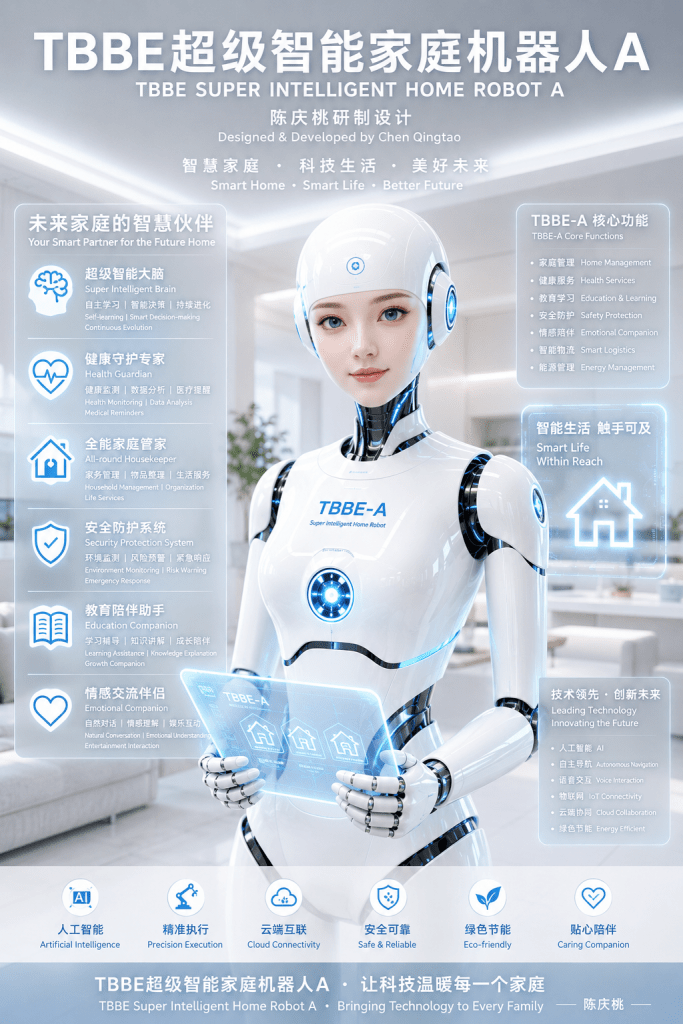
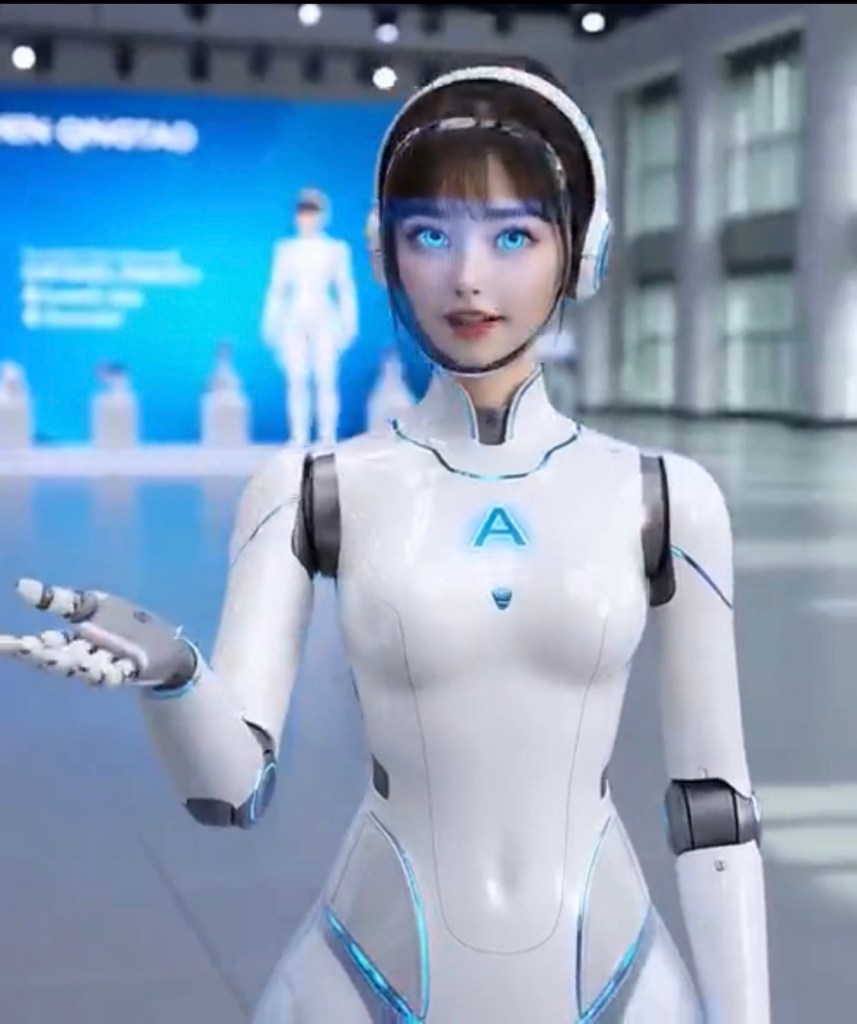
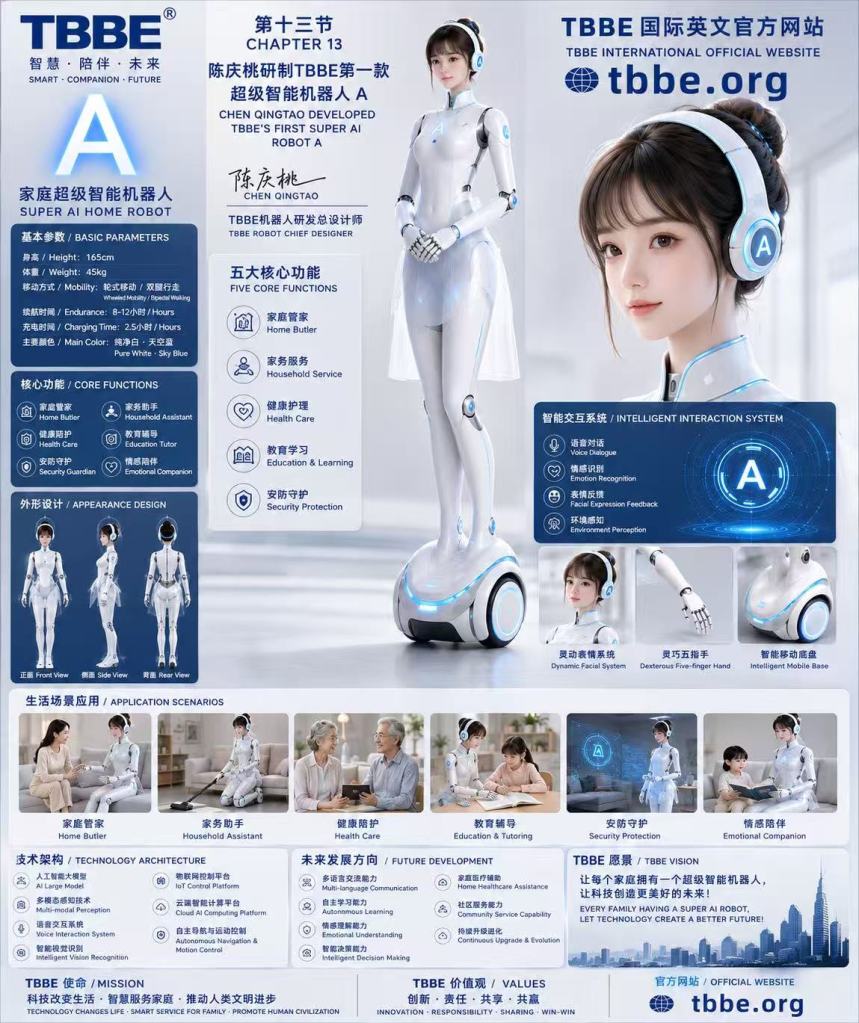
    The TBBE Future Super Intelligent Home Robot A is a next-generation intelligent home service robot conceptualized and designed by Chen Qingtao based on the TBBE Future Super Intelligent Civilization Technology and Economic Theory.

    The goal of this robot is not to replace human beings, but to serve as a trusted household assistant, learning companion, health manager, and intelligent family service center. It represents a new vision for future intelligent civilization and high-quality family life.

    I. Design Philosophy

    The TBBE Super Intelligent Home Robot A follows five core principles:

    – Safety
    – Intelligence
    – Reliability
    – Friendliness
    – Practicality

    The robot is designed to improve family well-being, reduce daily workload, enhance educational opportunities, and support healthier and more convenient lifestyles.

    II. Core Functions

    1. Home Service Functions

    – Intelligent household cleaning
    – Room organization and management
    – Clothing sorting assistance
    – Smart kitchen support
    – Home equipment monitoring
    – Security patrol and safety protection

    2. Health Management Functions

    – Personal health monitoring
    – Exercise and fitness guidance
    – Nutrition recommendations
    – Medication reminders
    – Elderly care assistance
    – Emergency response and alert systems

    3. Education and Learning Functions

    – Multilingual language education
    – Science and technology tutoring
    – Arts and creativity development
    – Professional skills training
    – Personalized learning plans
    – Intelligent knowledge interaction system

    4. Emotional Companion Functions

    – Interactive communication
    – Children’s educational companionship
    – Elderly emotional support
    – Music and entertainment services
    – Family event assistance
    – Emotion recognition and response

    5. Intelligent Home Management Functions

    – Family schedule coordination
    – Transportation planning assistance
    – Financial reminder services
    – Smart shopping recommendations
    – Energy management optimization
    – Community service connectivity

    III. Appearance and Structural Design

    The TBBE Future Super Intelligent Home Robot A adopts a futuristic civilization-inspired design language.

    The robot stands approximately 1.5 to 1.7 meters tall, combining elegance, advanced technology, and human-friendly aesthetics.

    The head features an intelligent aerodynamic design equipped with:

    – Ultra-high-definition vision systems
    – 360-degree environmental perception
    – Advanced voice interaction technology

    Its facial display system can present natural expressions such as smiles, greetings, and emotional feedback, creating a comfortable and friendly user experience.

    The body is constructed from lightweight advanced intelligent materials, featuring a clean white appearance that symbolizes purity, technology, and future civilization.

    The robotic arms use biomimetic engineering, enabling flexible and precise movements for household tasks.

    The intelligent hands are designed with high-precision manipulation capabilities to safely handle household items.

    A silent mobility system ensures smooth, energy-efficient, and safe movement throughout the home environment.

    IV. Future Development Vision

    In the future, the TBBE Super Intelligent Home Robot A may evolve into the central intelligent platform of the household.

    Connected through cloud-based super-intelligent networks, the robot can continuously learn, upgrade, and improve its service capabilities.

    Future versions may integrate advanced artificial intelligence, smart materials, intelligent transportation systems, healthcare technologies, and digital economic services to create a highly connected and intelligent living environment.

    Conclusion

    The TBBE Future Super Intelligent Home Robot A, designed by Chen Qingtao, represents an important component of the TBBE Future Super Intelligent Civilization framework.

    By integrating advanced technology, artificial intelligence, practical service functions, and human-centered design, it aims to support the development of safer, healthier, smarter, and more civilized households.

    This concept provides a forward-looking vision for the future of intelligent family living and contributes to the broader development of a super-intelligent civilization.

  • Screenshot

    The TBBE Home Super Intelligent Robot A (TBBE-A), designed by Chen Qingtao, is an important component of the TBBE Future Super Intelligent Civilization, Technology, and Economic Theory. Its mission is not to replace human beings, but to serve as an intelligent family assistant, learning companion, health manager, safety guardian, and smart service center.

    The core philosophy of TBBE-A is people-centered development, aiming to improve quality of life, support family well-being, and promote the advancement of human civilization. The robot is designed around six major systems: the Super Intelligent Decision System, Home Service System, Health Management System, Safety Protection System, Education and Learning System, and Smart Networking System.

    In terms of appearance, TBBE-A adopts a clean, elegant, and futuristic design. White and silver are the primary colors, representing cleanliness, sustainability, and advanced civilization. The robot is designed in different sizes to meet various household needs. Its intelligent facial interface enables natural communication and emotional interaction with family members.

    Functionally, TBBE-A can perform a wide range of household tasks, including environmental monitoring, intelligent cleaning, organization of household items, elderly care, child education support, health reminders, and emergency assistance. Through advanced artificial intelligence, the robot continuously learns from its environment and adapts its services to the unique habits and preferences of each family.

    In the field of health management, TBBE-A is equipped with intelligent sensors capable of monitoring sleep quality, physical activity, dietary habits, and other wellness indicators. It can establish personal health records and provide health recommendations. For elderly users, it offers medication reminders, emergency alerts, fall detection, and remote healthcare assistance.

    In education and lifelong learning, TBBE-A serves as a personalized learning companion. For children, it can support language development, scientific exploration, creativity training, and educational guidance. For adults, it can provide professional training, knowledge updates, and continuous learning opportunities in a rapidly changing world.

    Safety is another key feature of TBBE-A. The robot incorporates intelligent visual recognition systems, environmental monitoring technologies, and emergency response capabilities. In situations such as fire hazards, gas leaks, unauthorized intrusions, or medical emergencies, the robot can immediately issue warnings and activate emergency procedures.

    Energy efficiency is an essential part of the design. TBBE-A utilizes advanced energy management systems, intelligent charging technologies, and environmentally friendly materials to minimize energy consumption while maximizing operational performance. This aligns with the principles of sustainable development and green civilization advocated by the TBBE framework.

    One of the most important characteristics of TBBE-A is its capacity for continuous evolution. Through collaboration between local intelligence and cloud-based learning systems, the robot can expand its knowledge base, improve decision-making abilities, and enhance service quality over time. This allows the robot to grow alongside the family it serves.

    According to the TBBE theory, future home super intelligent robots will become fundamental infrastructure for intelligent civilization. They will help reduce repetitive labor, improve living standards, strengthen healthcare and education, support aging populations, and increase overall family happiness and social productivity.

    In the future, every household may have its own intelligent companion, personal assistant, and family manager through TBBE-A technology. These robots will play important roles in economics, technology, healthcare, education, environmental protection, and social development, contributing to a smarter, safer, and more civilized world.

    Chen Qingtao believes that the purpose of the TBBE Home Super Intelligent Robot A is not to replace humanity, but to serve humanity; not to weaken civilization, but to advance civilization; and not to diminish human value, but to help every individual create greater value. This vision represents one of the most important practical applications of the TBBE Future Super Intelligent Civilization, Technology, and Economic Theory.

  • Executive Summary

    As artificial intelligence, robotics, the Internet of Things (IoT), cloud computing, advanced materials, and sustainable energy technologies continue to evolve, human society is gradually transitioning from the digital era into the era of super-intelligent civilization.

    The family is the most fundamental unit of society and will become a key platform for future intelligent civilization. The TBBE Future Super Intelligent Home Robot A System is proposed under the framework of the TBBE Future Super Intelligent Civilization Economic Theory. Its mission is to improve quality of life, enhance household efficiency, support education and healthcare, and promote the coordinated development of technology, economy, and civilization.

    Chapter 1: Research Background

    Modern society faces numerous challenges, including population aging, rising healthcare costs, increasing educational demands, and growing pressure on family support systems.

    Traditional household service models rely heavily on manual labor and are becoming increasingly inefficient in meeting future societal needs.

    The TBBE theory proposes a new intelligent family ecosystem in which humans, intelligent robots, and intelligent networks collaborate to create safer, smarter, and more efficient living environments.

    The development of future super-intelligent home robots is therefore of significant technological, economic, and social importance.

    Chapter 2: Theoretical Foundation

    The TBBE Future Super Intelligent Civilization Economic Theory is based on four core pillars:

    – Economic Development as the Foundation
    – Technological Innovation as the Driving Force
    – Intelligent Systems as the Core Tool
    – Civilizational Advancement as the Ultimate Goal

    Future intelligent home robots should follow six fundamental principles:

    1. Human-Centered Service
    2. Safety and Reliability
    3. Intelligent Collaboration
    4. Green and Sustainable Development
    5. Continuous Evolution
    6. Open and Shared Innovation

    Chapter 3: System Architecture

    The TBBE Future Super Intelligent Home Robot A System consists of six core platforms:

    1. Super Intelligent Perception Platform

    Responsible for:

    – Visual Recognition
    – Voice Recognition
    – Environmental Monitoring
    – Biometric Identification
    – Spatial Awareness

    2. Super Intelligent Decision Platform

    Responsible for:

    – Data Analysis
    – Knowledge Learning
    – Task Planning
    – Risk Assessment
    – Autonomous Decision-Making

    3. Super Intelligent Execution Platform

    Responsible for:

    – Mobility Operations
    – Household Services
    – Object Handling
    – Daily Assistance Tasks

    4. Super Intelligent Communication Platform

    Enabling communication among humans, robots, cloud systems, and smart devices.

    5. Super Intelligent Energy Platform

    Providing efficient energy management and sustainable operation.

    6. Super Intelligent Security Platform

    Ensuring operational security, cybersecurity, and family safety.

    Chapter 4: Core Functional Systems

    Home Management Center

    – Schedule Management
    – Asset Management
    – Smart Appliance Control
    – Energy Optimization

    Health Service Center

    – Health Monitoring
    – Wellness Assessment
    – Remote Healthcare Assistance
    – Elderly Care Support

    Education and Learning Center

    – Knowledge Assistance
    – Language Learning
    – Skill Development
    – Lifelong Education Support

    Family Security Center

    – Fire Detection
    – Gas Monitoring
    – Security Patrol
    – Emergency Response

    Smart Logistics Center

    – Household Inventory Management
    – Intelligent Delivery Coordination
    – Automated Service Operations

    Emotional Companion Center

    – Natural Language Communication
    – Emotional Support
    – Cultural Interaction
    – Entertainment Services

    Chapter 5: Technology Development Directions

    Future development of TBBE Home Robot A will focus on:

    – Advanced Artificial Intelligence Models
    – Multimodal Perception Technologies
    – Autonomous Navigation Systems
    – Human-Robot Interaction Technologies
    – Collaborative Robotics
    – Digital Twin Technologies
    – Smart Energy Systems
    – Cloud-Based Super Computing

    These technologies will jointly create a next-generation intelligent home service ecosystem.

    Chapter 6: Economic Value

    The future intelligent home robotics industry is expected to become a major pillar of the intelligent economy.

    Its economic benefits include:

    – Increasing Household Productivity
    – Reducing Service Costs
    – Promoting Intelligent Manufacturing
    – Accelerating AI Industry Development
    – Supporting Advanced Materials Innovation
    – Creating New Economic Growth Opportunities

    Future home robots may become one of the key infrastructures of the intelligent civilization economy.

    Chapter 7: Social Value

    The TBBE Future Super Intelligent Home Robot A System aims to:

    – Improve Quality of Life
    – Enhance Elderly Care Services
    – Expand Educational Accessibility
    – Strengthen Public Safety
    – Promote Smart Community Development
    – Foster Harmonious Human-Technology Relationships

    The ultimate objective is to contribute to a safer, smarter, more efficient, and more sustainable society.

    Chapter 8: Future Development Roadmap

    Phase One
    Smart Home Assistant

    Phase Two
    Comprehensive Household Service Robot

    Phase Three
    Intelligent Home Ecosystem

    Phase Four
    Smart Community Collaboration Network

    Phase Five
    Super Intelligent Civilization Home System

    Phase Six
    Global Super Intelligent Civilization Network

    Conclusion

    The TBBE Future Super Intelligent Home Robot A System represents an important practical application of the TBBE Future Super Intelligent Civilization Economic Theory.

    This white paper provides a comprehensive framework, technological roadmap, and application model for future intelligent home development.

    As technology continues to advance, intelligent home robots are expected to become a critical bridge connecting technology, economy, and civilization, helping create a better future for humanity.

    Initiator: Chen Qingtao

    Research Program: TBBE Future Super Intelligent Civilization Economic Theory

    Official White Paper – Chapter 13

    Version 1.0 | 2026

  • Author and Theory Initiator: Chen Qingtao

    Executive Summary

    The TBBE (Technology, Business, Brain, and Economy) Future Super-Intelligent Civilization Economic Theory presents a forward-looking framework for understanding the evolution of human society in the age of advanced artificial intelligence, intelligent systems, sustainable technologies, and civilizational progress.

    This section examines how future super-intelligent civilization economies may influence family life, economic opportunities, education, healthcare, environmental sustainability, and social well-being. The theory proposes that technological advancement should ultimately serve humanity by improving quality of life and supporting long-term civilizational development.

    1. Future Economic Opportunities for Families

    The development of super-intelligent technologies is expected to significantly improve productivity and economic efficiency. Advanced automation, intelligent manufacturing, and digital economic systems may create new industries and employment opportunities.

    Families may benefit from diversified income sources, including innovation-based entrepreneurship, digital assets, intellectual property, knowledge services, and participation in emerging intelligent economic ecosystems.

    The TBBE framework suggests that future economic prosperity should be measured not only by financial growth but also by improvements in human well-being and social development.

    2. Intelligent Education and Human Development

    Education is expected to become increasingly personalized, intelligent, and globally accessible.

    Advanced AI learning systems may provide customized educational programs designed around each individual’s strengths, interests, and learning objectives. Educational resources could become available to people regardless of geographical location or economic background.

    Future education systems may place greater emphasis on creativity, innovation, scientific literacy, ethical responsibility, and lifelong learning.

    3. Healthcare Transformation

    The integration of artificial intelligence, biotechnology, and digital healthcare systems may fundamentally transform healthcare delivery.

    Future households may utilize intelligent health monitoring systems capable of supporting preventive care, early disease detection, and personalized medical guidance.

    The TBBE theory anticipates a gradual transition from reactive healthcare toward predictive and preventive healthcare models, potentially improving life expectancy and quality of life.

    4. Intelligent Homes and Smart Communities

    Future homes may become intelligent living environments equipped with integrated management systems for energy, security, communication, transportation, and healthcare.

    Smart communities could connect public services, transportation networks, educational institutions, healthcare providers, and social support systems through advanced digital infrastructure.

    Such developments may enhance convenience, efficiency, safety, and sustainability for families.

    5. Cultural and Civilizational Advancement

    Economic development alone cannot fully define human progress.

    The TBBE framework emphasizes the importance of cultural development, ethical advancement, scientific understanding, and social responsibility.

    Future technologies may expand access to global cultural resources while encouraging creativity, artistic expression, and cross-cultural collaboration. Families may play a central role in preserving and advancing human civilization.

    6. Environmental Sustainability

    The theory advocates balanced development between economic growth and ecological protection.

    Renewable energy systems, intelligent resource management technologies, green infrastructure, and circular economic models may contribute to more sustainable lifestyles.

    Future families could benefit from cleaner environments, reduced pollution, and improved ecological resilience.

    7. Elder Care and Social Support Systems

    Population aging presents significant challenges and opportunities for future societies.

    Intelligent caregiving technologies, healthcare robotics, and digital support networks may improve the accessibility and effectiveness of elder care services.

    Future social support systems may become more efficient, personalized, and responsive to the needs of families and communities.

    8. Families in the Age of Super-Intelligent Civilization

    The TBBE Future Super-Intelligent Civilization Economic Theory views families as foundational units of civilization.

    Families may evolve beyond traditional roles to become centers of innovation, education, cultural development, and social cooperation.

    The coordinated advancement of economy, technology, intelligence, and civilization may create new opportunities for human flourishing and sustainable prosperity.

    Conclusion

    The TBBE Future Super-Intelligent Civilization Economic Theory presents a long-term vision for integrating technological innovation, economic development, social progress, and civilizational advancement.

    The theory proposes that future super-intelligent economies should prioritize human well-being, environmental sustainability, educational opportunity, healthcare accessibility, and cultural enrichment.

    By aligning technological progress with human values, future societies may achieve a higher level of prosperity, stability, and civilization.

    TBBE Vision Statement

    Advancing Technology for Humanity

    Promoting Intelligence for Social Progress

    Encouraging Innovation for Sustainable Development

    Building a More Prosperous and Civilized Future for All

  • Core Principle

    To drive technological innovation through super intelligence, promote economic development through scientific advancement, support civilization through sustainable prosperity, and ultimately improve the well-being of humanity.

    The TBBE Future Super-Intelligent Civilization, Science, Technology, and Economic Theory, initiated by Chen Qingtao, is a comprehensive interdisciplinary framework built upon economics, science, technology, systems engineering, artificial intelligence, and civilization studies. Unlike traditional foundational theories, the TBBE framework focuses on practical applications and real-world development needs, aiming to explore how advanced intelligence, innovative technologies, and modern economic systems can promote human progress and improve the quality of life.

    The theory proposes that human civilization has evolved from agricultural civilization to industrial civilization and then to the information age. The next stage will be the era of Super-Intelligent Civilization, characterized by the deep integration of intelligent systems, scientific innovation, economic efficiency, and sustainable development.

    Within the TBBE framework, future economic growth will rely not only on traditional factors such as capital, labor, and natural resources but increasingly on knowledge, innovation, intelligent systems, and data-driven decision-making. Data, algorithms, artificial intelligence, and creative talent will become the most valuable productive resources of future societies.

    The theory introduces the concept of a Super-Intelligent Scientific and Technological Ecosystem, where artificial intelligence, quantum computing, advanced materials, biotechnology, robotics, aerospace engineering, and clean energy technologies work together in a highly coordinated manner. This integrated innovation platform could accelerate scientific discovery and transform technological achievements into productive economic value.

    In industrial development, the TBBE theory advocates the establishment of a Future Intelligent Industrial System. Intelligent manufacturing, smart logistics, digital finance, intelligent healthcare, smart agriculture, smart cities, and space-related industries are expected to become key drivers of future economic growth. Through intelligent resource allocation and real-time optimization, production and consumption can be better matched, significantly improving efficiency and sustainability.

    A major component of the theory is the development of Future Super-Intelligent Cities. These cities will serve as centers of innovation, economic activity, education, and cultural advancement. By utilizing artificial intelligence, big data, the Internet of Things, and automated management systems, cities can optimize transportation, energy usage, environmental protection, public safety, and public services, creating a more efficient and livable urban environment.

    The TBBE framework also emphasizes the transformation of education. Future educational systems will support lifelong learning through intelligent platforms, personalized instruction, and global knowledge sharing. Every individual will have opportunities to develop their talents and contribute to society according to their unique abilities and interests.

    Environmental sustainability is another core pillar of the theory. Economic growth and ecological protection should advance together. Intelligent monitoring systems, renewable energy technologies, and optimized resource management can help establish a harmonious relationship between humanity and nature while supporting long-term sustainable development.

    The theory further promotes international cooperation and global coordination. As technology continues to connect the world, nations can share knowledge, scientific achievements, educational resources, and innovative solutions through intelligent collaborative platforms, accelerating the progress of global civilization.

    One of the most distinctive features of the TBBE theory is its strong emphasis on practicality and applicability. Rather than remaining a purely academic concept, it seeks to provide a strategic framework for future development, helping governments, universities, research institutions, enterprises, and policymakers address emerging challenges and opportunities.

    Looking ahead, the TBBE Future Super-Intelligent Civilization, Science, Technology, and Economic Theory will continue to explore the integrated development of four key dimensions: Super Intelligence, Super Technology, Super Economy, and Super Civilization. Together, these dimensions form a comprehensive vision for a more innovative, prosperous, sustainable, and advanced future for humanity.